The Shape of Ordinary Hope
What started as idle speculation became something more: a glimpse of the quiet ways hope shows up in everyday life.
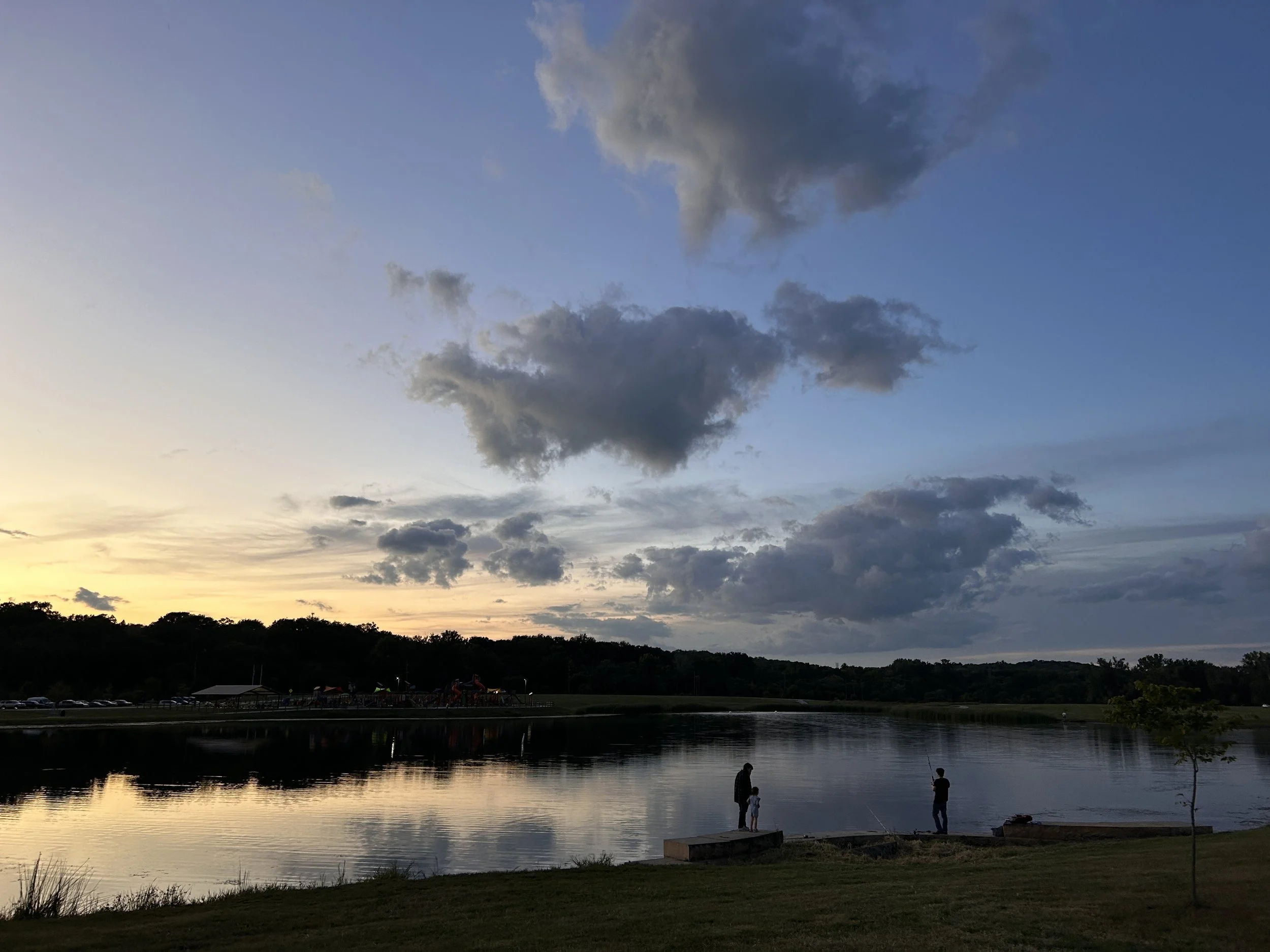
The place we find ourselves returning to.
My wife and I took our bag of tacos to a nearby lake – a place that means a lot to us. Neither of us had the energy to get out and wander around, so we parked, ate, talked and speculated.
Well, I did most of the speculating.
“Those three women right there,” I said, pointing, “are three friends who formed a walking group a while back. They bring their dogs, catch up with each other and put in their steps. They make two laps around the lake every time they come here.” Then they veered off the path, heading away from the lake. “Except for today. Today they are chasing adventure …”
And so it went, making up stories as I scanned the crowd.
“This guy who’s coming up the hill toward us slipped away to take his two boys fishing. Doesn’t look like they caught anything, but I bet they enjoyed it.” It was 1:00 p.m., and I had just finished pontificating about how real fishermen go out at 5:00 a.m. because fish tend to feed when it’s cool. This coming from a guy who can barely bait a hook or take a squirming fish off a hook.
“And that little guy,” who was maybe three years old, “is trying to catch up to his mom or dad but his legs are like one-eighth the length of his parents, so he’s saying, ‘Wait for me! I can’t run as fast as you can walk. My legs are shorter than yours!’”
I don’t know why I do this. Maybe because I’m a writer at heart who is always observing human nature so I can accurately portray it in my work. I’m looking for meaning, and ultimately, hope.
I’m looking for it in the walking club who is chasing better health. In the dad who takes his two boys fishing, hoping to build on those relationships, and maybe impart some wisdom. And even the little boy who hopes to catch up with his parents.
Maybe that’s what I’m really seeing – small, ordinary forms of hope.
A few days later, I heard a song on the radio by Dokken titled “Lost Behind the Wall.” It’s about someone who is trapped behind an emotional wall and is unreachable. One of the lines says it’s better to die than to live without hope. The song’s primary message is that suffering is survivable if a person has hope – even if it’s temporal.
As Christians, we have an even better form of hope. Eternal hope. I think about what the apostle Paul wrote in 1 Thessalonians 4:13–14 (ESV), “We do not want you to be uninformed, brothers, about those who are asleep, that you may not grieve as others do who have no hope. For since we believe that Jesus died and rose again, even so, through Jesus, God will bring with him those who have fallen asleep.”
It’s a vastly different kind of hope. But I don’t think we should devalue temporal hope.
In this very park, Clarissa and I transitioned one afternoon two years ago from friends to more than that. That day, in that place, my life changed. Every now and then, we go back. Maybe now I understand why.