Waiting Room Heartbreak
Beneath the silence, the screens and the uncertainty of waiting rooms lies a truth about what it means to be human.
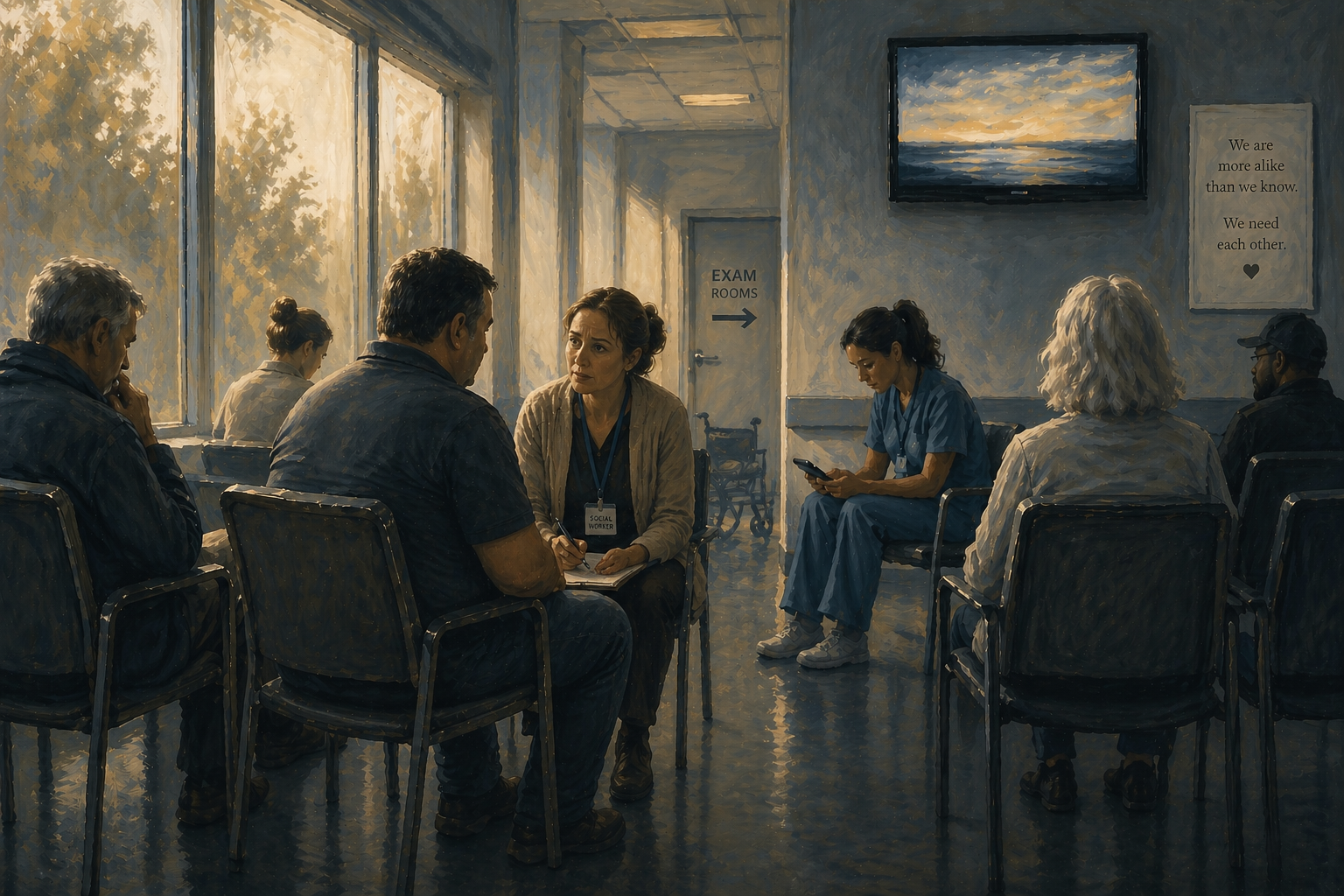
Medical waiting rooms are heartbreaking.
I sat in yet another one last week before a minor procedure. Like most people in those rooms, I was occupied with my own concerns – thinking about what was ahead, wondering how uncomfortable it might be, wanting it to be over with.
That seems to be the first instinct in a waiting room. We arrive carrying our own fears, our own discomfort and our own private questions. We watch the door. We listen for our names. We count the minutes.
But if we’re intentional, waiting rooms can turn our attention outward.
A man with physical challenges, probably a bit younger than me, spoke with a social worker nearby. I tried not to listen, but some conversations are impossible not to hear. Based on his answers, I got the sense that no one checks on him very often. He agreed to every suggestion the social worker made. I hope some of them helped ease his loneliness.
There was nothing dramatic about the exchange. No raised voices or tears. In fact, if I had to describe the man’s tone, I’d say it was optimistic. But deep down, I was saddened to hear how easily he had gone unseen.
In another waiting room I visited recently – this one for scans – a young woman in scrubs checked in and took a seat. She carried a heavy demeanor as she disappeared into her phone. It struck me that even people who spend their days caring for others eventually find themselves in the same chairs, waiting for their own names to be called.
Maybe that is what makes waiting rooms so tender and emotional for me. For a few minutes, titles, careers and appearances fade. The businessman, the retiree, the nurse, the caregiver, the patient – all of them are left with uncertainty.
What remains is need.
Not everyone in those rooms speaks. Most don’t. Many disappear into their phones, the televisions on the wall or their thoughts. But even in silence, something true is revealed: None of us is as self-sufficient as we imagine.
At some point, all of us learn this.
Waiting rooms quietly tell the truth. Bodies fail. Strength fades. Answers are delayed. We need skilled hands, kind words, good news and, sometimes, simply the courage to keep waiting. But most of all, we need each other.