Where the Field Used to Be
A quiet realization about legacy, memory and the families who come after us.
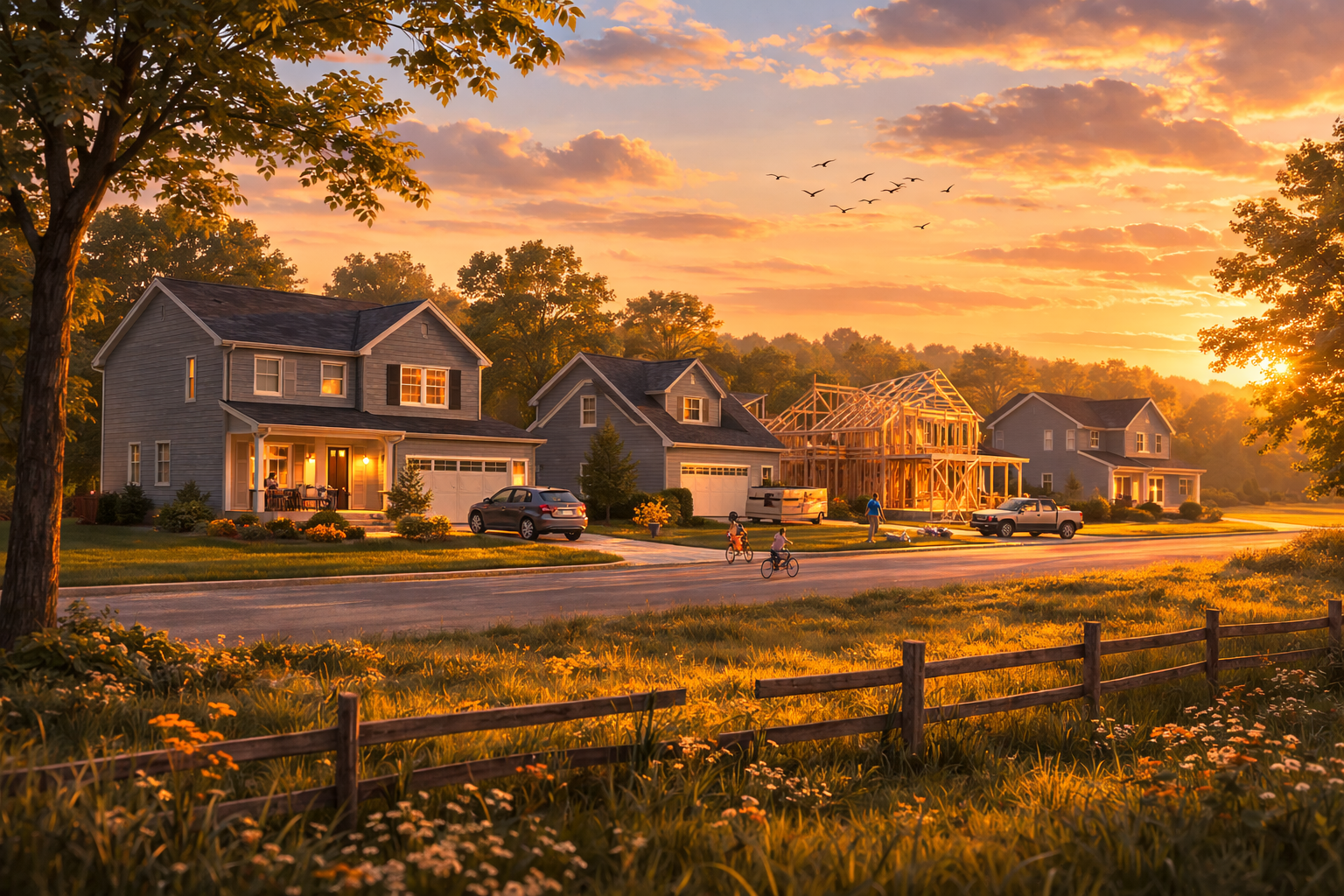
My grandparents once owned five houses on the same corner in my hometown. Just beyond them sat an empty field to the east. When I was young, it felt like that field would always be there.
After both of my grandparents passed, the houses slowly changed hands. Eventually, I sold the last remaining home that had been in the family. I knew the buyer was a developer. He already owned the empty field to the east and planned to build forty or fifty houses there. The old house would become his model home. I remember thinking that corner would never look the same again.
Earlier this week, I drove past the five homes. The formerly empty lot was full of streets and new homes. I’ve driven past it before, but something struck me this time. It didn’t feel like a loss. It felt like a new beginning.
I didn’t see any kids riding their bikes down the newly paved streets, and no one was outside working on their lawns. But I saw signs of life. Cars sat in driveways that didn’t exist until recently. Decks had grills waiting for summer evenings. And new homes were still rising where there had once been nothing but open ground.
Every time I drive past that field now, I suspect I’ll smile quietly to myself, knowing my grandparents had a small part in what stands there today. Sometimes the best legacy isn’t preserving things exactly as they were – it’s making room for new life.
I say that as a sentimentalist who clings to what was, afraid it might be forgotten. The older I get, though, the more I realize that’s okay. Each generation builds its own memories in the places it inherits.
Before long, children will ride bikes down those streets. Someone will drag a basketball hoop to the edge of a driveway. Dogs will bark at passing mail trucks. On warm evenings, families will sit on those decks beside the grills I noticed, talking about their days while the sun sinks behind the houses. Christmas lights will appear along the roofs in December. And in the fall, pumpkins will sit outside front doors.
Years from now, some of those families will move away, and others will take their place. The cycle will repeat itself in ways no one can quite predict.
They won’t have any idea how the neighborhood came into existence, nor will they know about my grandparents who moved homes onto the land just west of it in the 1960s. And that’s fine. They will simply be doing what my grandparents once did – living their lives the best they know how, enjoying their families and benefiting from the land. And that’s exactly as it should be.
But as long as the Lord gives me breath, I’ll remember the way it used to be and be grateful that these families are making new memories where an empty field once sat.