The Language Between Us
Words change with every generation, but maybe the best stories speak a language that never goes out of style.
I heard a nurse recently ask his 70-something-year-old patient how she was doing as he came on shift.
“Hunky-dory,” the patient said.
The nurse’s eyebrows furrowed. “I’m not sure what that means.”
“You must be young,” said the patient’s roommate, laughing.
The nurse was probably 30. This website says the phrase’s first known origin was in the 1860s. Apparently, its last known use happened before this nurse hit puberty.
Just kidding, kinda.
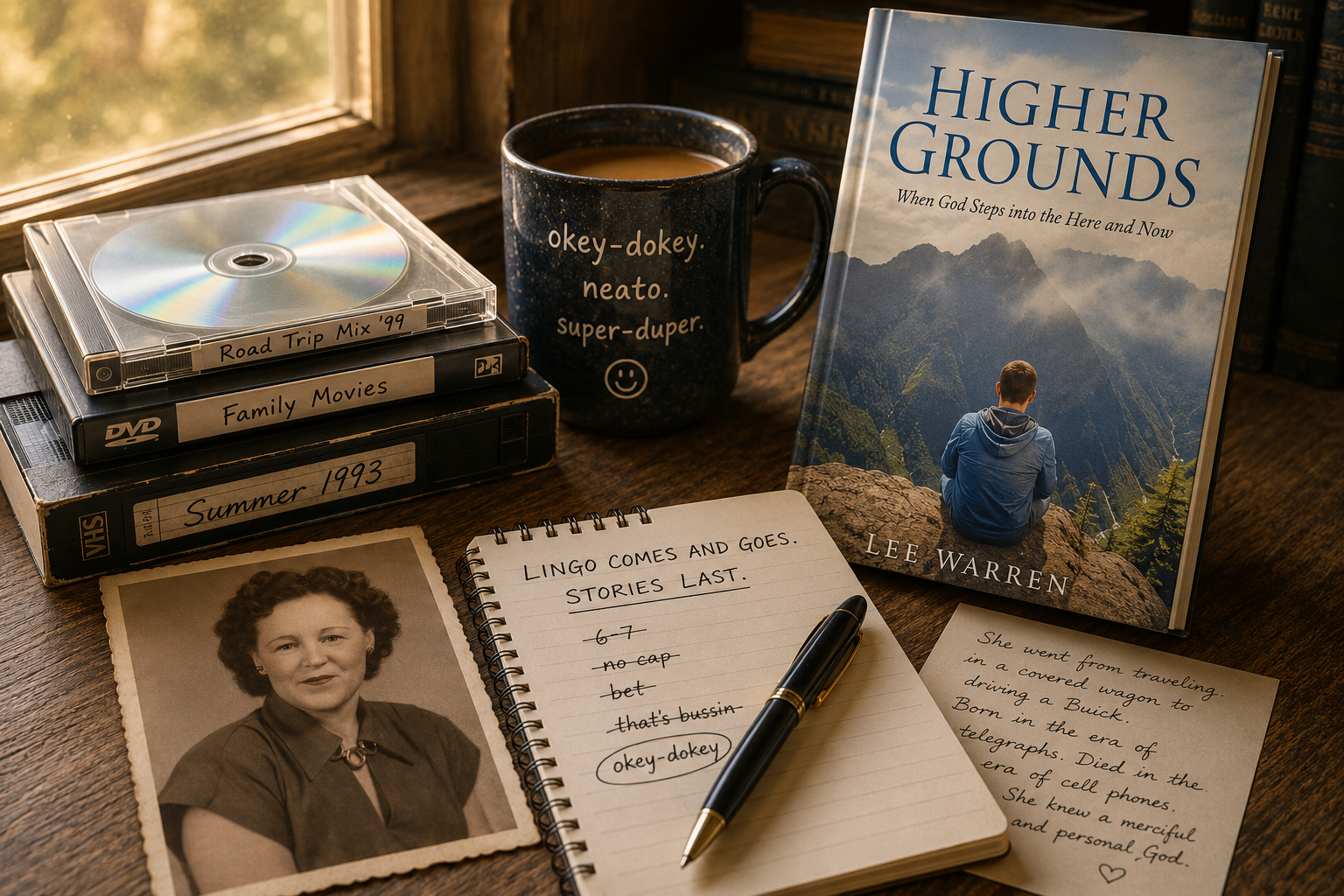
I’ve been writing about preserving the tangible in a digital world. As CDs and DVDs and even VHS tapes make a comeback, I wonder if phrases like hunky-dory will too. It would be neato if it happened. Super-duper even.
But I have my doubts.
In all seriousness, I’m not really trying to hang on to yesterday. And I doubt I’ll pick up all the new lingo to communicate with the young. But I also don’t want to lose touch.
In fact, I did latch on to 6-7 for a while, until my 12-year-old nephew told me it was no longer a thing – mostly because old people like me got hold of it and started using it.
That’s the thing. You can learn the new lingo, and it can become obsolete before your eyes.
So what’s a Gen Xer to do? I love kids, but as a guy who has two nephews, two nieces and one great-nephew, I really only have a few go-to phrases and shticks as I interact with them. Once the kids age out and get their own language, I find it more difficult to find common ground.
But then it occurred to me that maybe I’ve been trying to do that all along. I wrote three legacy books in the Finding Common Ground series – one of which (Higher Grounds) includes stories about my family’s spiritual history. I wrote that book hoping my nieces and nephews would stumble across it in the coming decades.
In one of the essays, I wrote about my Grandma Modene. Here’s an excerpt:
She went from traveling in a covered wagon many miles along the back roads of Arkansas to attend worship services with her family to driving a Buick just a few blocks to the church she helped to establish in Bellevue, Nebraska, many years later. She was born in the era of telegraphs and died in the era of cell phones. She was born way before television and died knowing how to operate a VCR. Her generation saw more change than most ever will, so they didn’t have much choice but to adapt.
Grandma Modene entered into her reward on June 25, 2002, at the age of eighty-seven. She was the last of her generation in my family, as far as I know. She outlived her husband by seventeen years as well as two of her three sons, so she knew heartache and loneliness. But she also knew a merciful and personal God who cares a great deal about both conditions. She talked to him, read his Word, and looked forward to the day when she would see him face to face. What a glorious day June 25 must have been for her.
I pray that those two paragraphs communicate with my nieces and nephews whenever they get around to reading them. I also pray that they do my grandmother justice in their eyes, even though none of them ever met her.
Tom Stoppard once wrote, “Words are sacred. They deserve respect. If you get the right ones, in the right order, you can nudge the world a little.”
His quote makes me think that stories are the real common ground. Dated lingo comes and goes, but a well-told story can outlive the language used to tell it.